Insightful Tech Insights & Innovations
Explore our blog for the latest trends, expert tips, and in-depth articles on IT services, digital transformation, and cutting-edge technology solutions. Stay ahead with Softuvo's insights and innovations.

Flutter vs React Native in 2026: Which Framework Should You Build Your App On?
By the time most founders start researching Flutter vs React Native, they've usually already made one decision: they want a single app that works on both iOS and Android.
The confusion starts when they begin figuring out how to build it.
One article says Flutter is the future. Another argues React Native is the safer choice.
The truth is, both frameworks can power successful mobile apps. Companies use them every day to launch products, serve customers, and grow their businesses.
The bigger question is:
What should I build my business on?
Because once development starts, this decision affects hiring, timelines, maintenance, and how easily your product can evolve in the future.
That's what we're going to focus on here.
Getting Familiar with the Two Frameworks
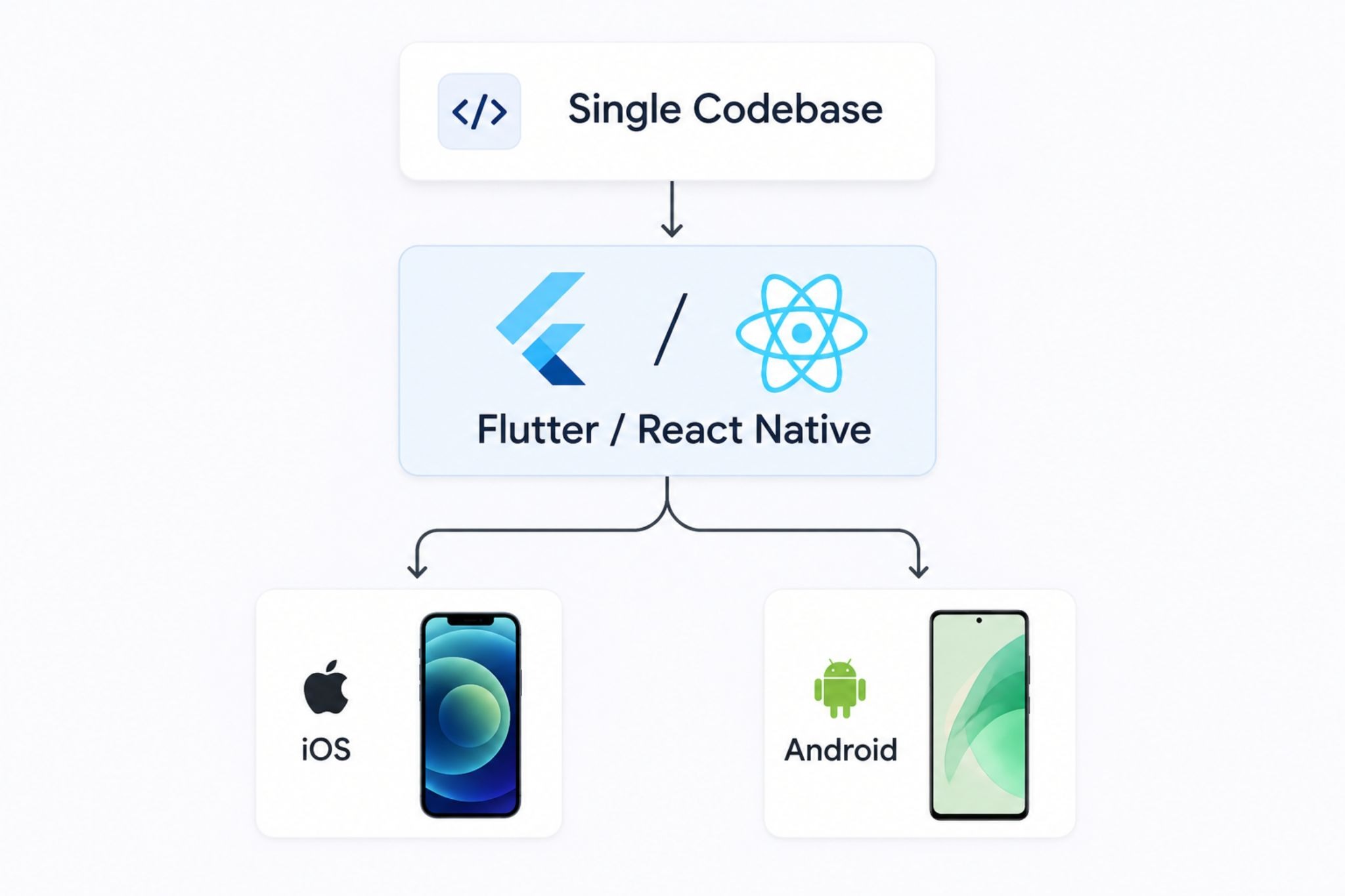
Both Flutter and React Native are cross-platform frameworks. In plain terms, you build the app once, and it runs on both iPhone and Android. You're not paying to build two separate apps from scratch.
Flutter is built and maintained by Google. React Native is built and maintained by Meta. Both are free, open-source, and backed by companies that depend on them internally.
According to the Stack Overflow 2024 Developer Survey, Flutter and React Native rank as the two most used cross-platform mobile frameworks globally, ahead of other alternatives.
That's the baseline. Now here's what actually separates them.
Flutter's Biggest Advantage
Some apps are tools. You open them, do a thing, close them.
Other apps are experiences. The animations matter. The transitions matter. Every screen has been thought through because the way it feels is part of what people are paying for.
Flutter was built for the second type.
It draws every pixel itself using its own rendering engine, which means your app looks identical on an iPhone 15 and a mid-range Android device. For fintech apps, health platforms, or consumer brands where visual consistency is non-negotiable, that precision matters.
Flutter also targets mobile, web, and desktop from a single codebase. If your roadmap eventually includes more than just a mobile app, that's not a small thing.
Many teams building for multiple platforms choose Flutter because it reduces the complexity of maintaining separate applications over time.
If multi-platform development is part of your strategy, a reputable Flutter app development company can help assess whether Flutter aligns with your long-term goals.
The Hiring Reality
Here's where Flutter gets complicated for founders.
Flutter uses a programming language called Dart. Most developers don't already know it. LinkedIn data shows roughly six times more React Native job listings than Flutter listings in the US. When you need to scale your team or replace someone mid-project, that gap becomes a real operational problem.
Flutter talent exists. It's just harder to find and takes longer to hire.
Where React Native Stands Out
React Native runs on JavaScript.
According to the Stack Overflow 2024 Developer Survey, JavaScript is the most widely used programming language (62.3%) in the world. That one sentence explains most of React Native's advantages.
If your business already has a web team, there's a real chance they already know it. They can read the code, contribute to the project, or at least follow along in reviews. That kind of continuity sounds minor until you're three months into a build and need someone to jump in.
The ecosystem is also more battle-tested. Payments, maps, analytics, push notifications, and libraries exist; they're well-documented, and they've been used in production by major companies for years. Instagram, Discord, Shopify, and Microsoft all run React Native at scale right now.
Where React Native Still Plays Catch-Up
For apps that are animation-heavy or visually complex, React Native is still a step behind.
The gap has closed significantly since React Native's architecture was overhauled in late 2024. But if you're building something where the visual experience is the product, not just a feature, Flutter is still the stronger tool.
The Comparison That Actually Matters to a Founder
Two Questions That Settle This Faster Than Any Benchmark
Stop reading comparison articles and ask these two:
1. Does your app's design do business work, or is it just a container for functionality?
If the design is functional (forms, lists, dashboards, user profiles), either framework handles it. If the design is part of what makes people stay, convert, or come back, it's Flutter.
2. What does your developer hiring situation look like?
Existing JavaScript team? React Native is the faster, lower-risk path. Starting from scratch with no team yet? React Native still has a larger talent pool.
Only go with Flutter if you have the time to find the right people or the visual requirements demand it.
Still Not Sure Which Framework Is Right for Your App?
That's completely normal.
The right choice depends on your product, timeline, budget, hiring plans, and long-term goals. What works for one business may not be the best fit for another.
Softuvo helps founders evaluate these decisions before development begins, so they can move forward with confidence.
The Uncomfortable Truth About This Decision
Most Flutter vs React Native comparisons are written by people who have a stake in one answer.
So here's the part that doesn't benefit anyone to say:
The framework is rarely what determines whether an app succeeds.
A weak team on Flutter builds a weak app. A strong team on React Native builds something users love. The framework is the tool. The team is the craftspeople.
What actually makes or breaks the build:
How well you define what you need before development starts
Whether the team has shipped something similar before
How decisions get made when scope changes (and it always does)
Whether there's a real QA process before anything goes live
Conclusion: So, Flutter or React Native?
Flutter makes more sense when:
The visual experience is central to your product
You're building in fintech, health, media, or consumer brands
Your roadmap includes a web or desktop application eventually
You have time to find the right Flutter team
React Native makes more sense when:
You need to move fast or scale the team quickly
You already have JavaScript developers on staff
Your app is functionality-first, logistics, B2B tools, and internal portals
You want a more established third-party integration ecosystem
It's generally easier to hire dedicated React Native developers as your product and team grow
And if you're still genuinely unsure, that's actually fine.
It usually means either framework would work for your product. Which means the real question is about who builds it, not what they build it on.
Need a Second Opinion?

Choosing a framework is easier when it's tied to a real product, a real budget, and a real roadmap.
If you're weighing Flutter against React Native, we'd be happy to take a look at your requirements and share what we'd recommend based on our experience building mobile apps across industries.
Schedule a Consultation with Softuvo
FAQs
Will my users notice a difference between a Flutter and React Native app?
Rarely. A well-built app on either framework feels native. Users care about speed and experience, not what's underneath.
Is Flutter really harder to hire for?
Yes, there are roughly six times more React Native job listings than Flutter ones. Good Flutter developers exist, but expect the search to take longer.
Which one launches faster, Flutter or React Native?
Usually, React Native. Its larger talent pool often makes hiring and development faster. With an experienced team, though, either framework can deliver quickly.
Can I switch frameworks later?
Technically yes. Practically, it means a near-complete rewrite. Get this right early, and you won't need to.
Do serious companies actually use both?
Yes.
Instagram and Discord run on React Native.
Google Pay and BMW run on Flutter.
Both are production-proven at scale.
What if I also want a web version of the app?
Flutter handles multi-platform more cleanly. If the web is anywhere on your roadmap, it's worth factoring that in now.
Which one is better for a first app build?
React Native, in most cases. The larger talent pool makes it easier to find experienced developers, and the ecosystem is more forgiving when you're shipping something for the first time.